Quick Guide
Introduction
Chengdu is one of the few Chinese cities where heritage is still something you do rather than something you look at. The face-changing of Sichuan opera, the three-piece gaiwan in a hundred-year teahouse, and the needlework of Shu embroidery are all on the national intangible cultural heritage list (非物质文化遗产) — and all of them can be experienced in a single day.
"Intangible heritage" sounds abstract. In Chengdu it means a performer flipping a mask faster than your eye can follow, a tea pourer refilling your cup without asking, and a teacher guiding your hand through the first hundred stitches of a fan. None of it is roped off.
This guide covers the three experiences most worth your time, the venues and teahouses locals actually choose, what a workshop involves, and how to fit opera, tea and craft into one unhurried day.
1–2 h
for a compact opera show
¥20–50
tea, with free refills
1–3 h
for a craft workshop
The one-day version
Tea at 14:00, a craft workshop at 16:00, an opera show at 19:30. All three are indoors, all three are close to the centre, and together they explain more about Chengdu than any museum label. If it rains, keep the plan.
1. Sichuan Opera: Face-Changing Up Close
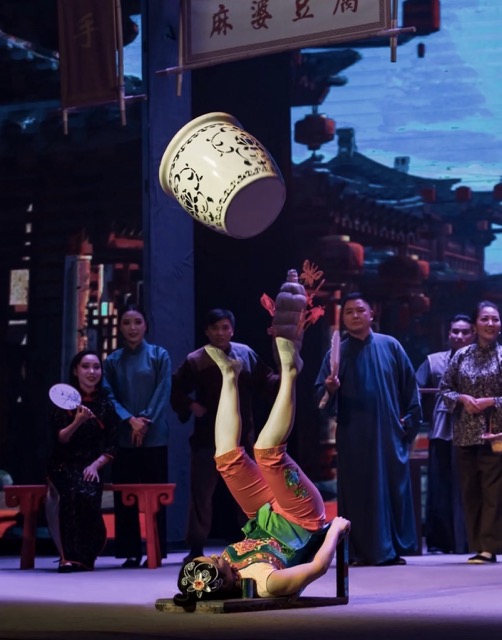
Sichuan opera (川剧) is not one style but five, with 高腔 (high-pitched singing) at its core. The music is loud, the percussion is constant, and the chorus often sings lines the hero cannot say. None of that is why visitors come. They come for 变脸 — face-changing — and 吐火, the burst of fire that ends the trick.
A performer walks on in full costume, turns, and the mask has changed. Another turn and it has changed again. The masks are thin silk layers hidden in the sleeves and collar, flicked away with a fan or a snap of the head. In skilled hands the change is faster than a camera flash. No one will explain the mechanism; the trade is guarded, and the mystery is the point.
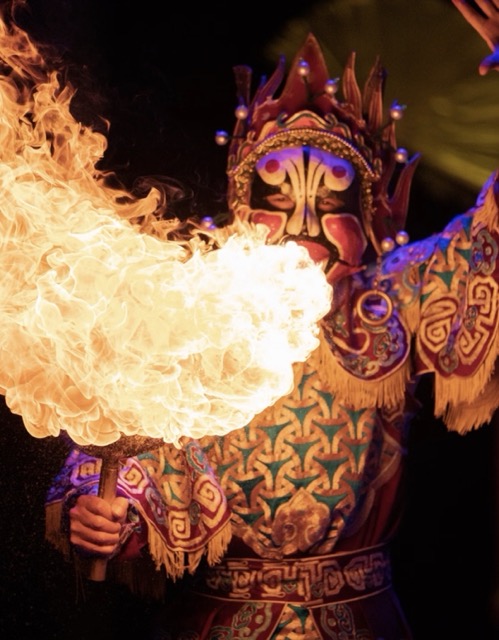
A typical tourist programme lasts one to two hours and strings together the crowd-pleasers: face-changing, fire-spitting, acrobatics, shadow puppetry and a comic sketch in Sichuan dialect. It is family-friendly, visually loud and easy to follow without a word of Chinese. Purists may find it a tasting menu rather than a full opera, but for a first night in Chengdu it is exactly the right length.
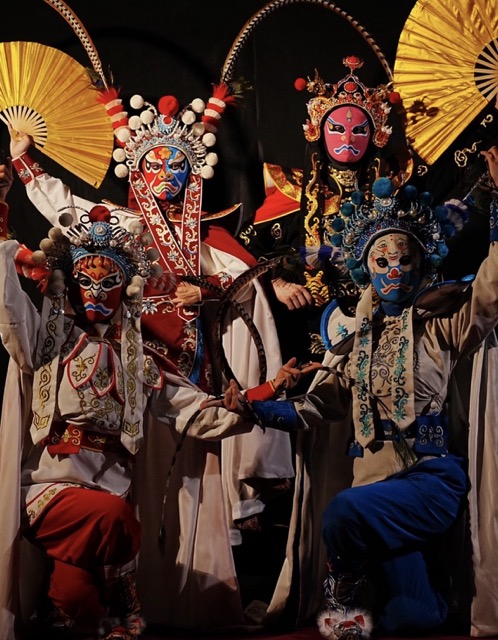
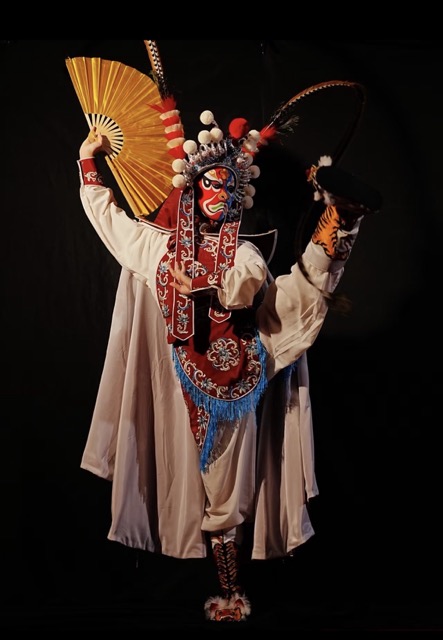
Arrive early. The halls are small, seats are close together, and the front rows fill first. Tea and peanuts are usually part of the ticket or a few yuan extra, and the room stays lit enough to see the masks. Photography is generally allowed without flash; ask before filming a full sequence, and never walk onto the stage for a photo.
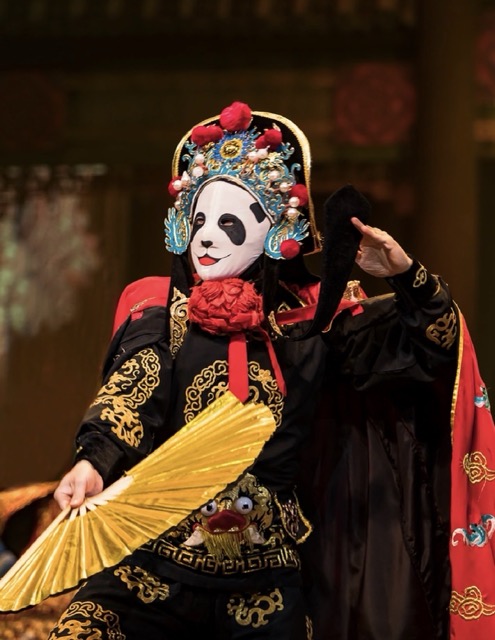
Where to see it
Forget the grand opera house. Chengdu's best shows happen in courtyards, guild halls and teahouse theatres with a few hundred seats.
| Venue | What it is known for | Best for |
|---|---|---|
| Baijia Ban Sichuan Opera Troupe 百家班川剧团 |
A working troupe with a compact, crowd-pleasing programme | A first, no-frills opera night |
| Liyuan Guild Hall 梨园会馆 |
Old guild-hall setting, traditional programme | Atmosphere and photographs |
| Da Xitai Teahouse 大戏台茶馆 |
Tea-house theatre with a stage at the centre | Tea and opera in one sitting |
| Xidie Theatre 戏蝶剧社 |
Small, intimate room; short face-changing sets | Being close enough to see the silk move |
| Chunxi Theatre 春熙剧场 |
Central location near the shopping district | An easy add-on to a city evening |
Booking and seats
Book weekend shows a day or two ahead; weekday shows are usually available on the day. Tickets are cheap by international standards, but the cheapest seats can be behind a pillar, so look at a seating plan if one is offered. Ask whether the programme includes both face-changing and fire-spitting — most do, but not all.
2. Gaiwan Tea: Chengdu's Slow Life
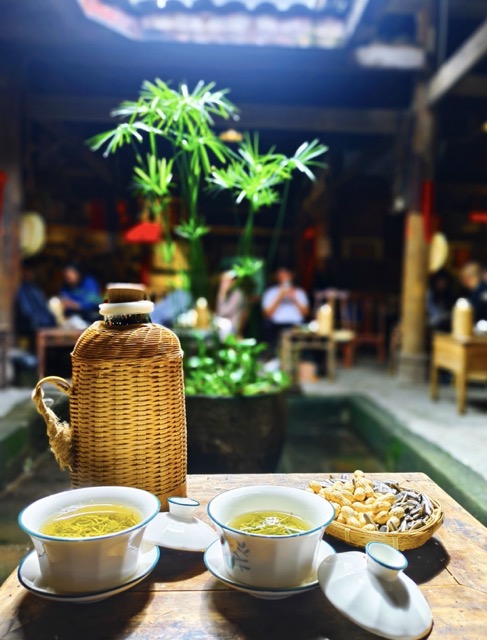
A gaiwan (盖碗) is three pieces: a saucer, a bowl and a lid. The old reading is heaven, earth and humanity — the lid covers, the saucer supports, the bowl holds. You grip the saucer with your left hand, lift the lid with your right, push the floating leaves aside and sip from the bowl. It looks delicate; it is mostly a way to slow down.
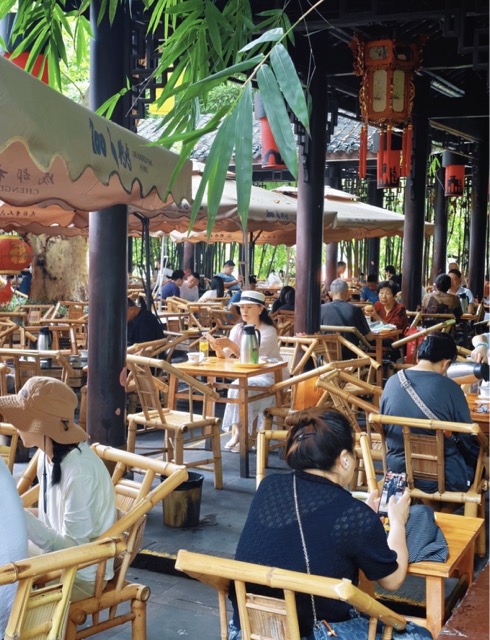
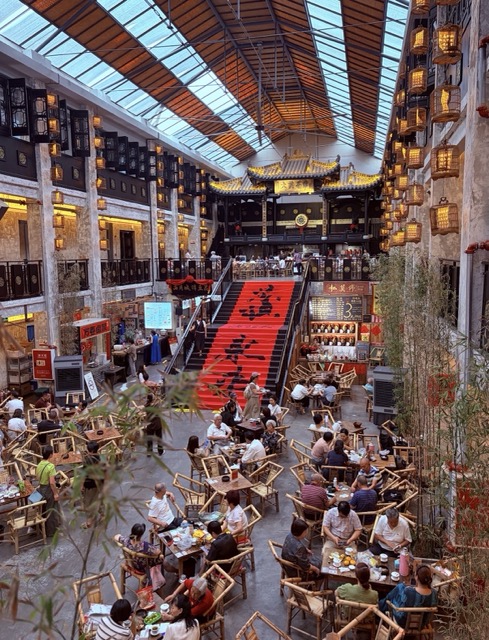
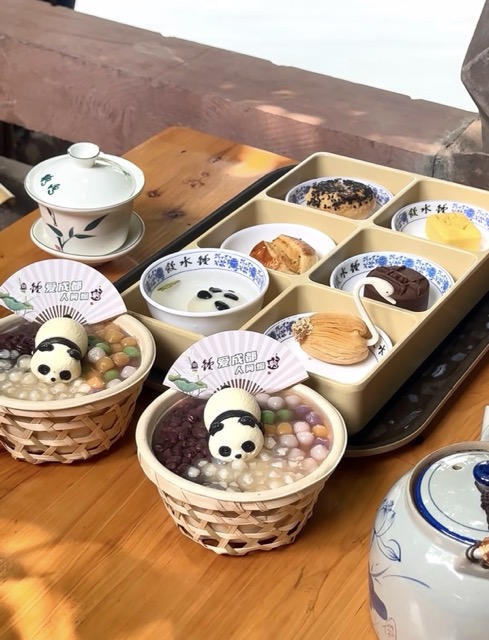
In a Chengdu teahouse nobody rushes you. Order jasmine or 碧潭飘雪 (a jasmine-scented green tea), take a bamboo chair, and the same leaves will be refilled with hot water for as long as you sit. Melon seeds, peanuts and dried fruit arrive alongside. The point is not the tea. The point is the two hours around it.
Five teahouses worth the afternoon
Heming Teahouse · 鹤鸣茶社
People's Park · since 1923
The most famous teahouse in the city, always full, always loud. Come for the spectacle of Chengdu doing nothing at all.
Jinqin Old Teahouse · 金琴老茶馆
Local neighbourhood
A locals' room with a strong period feel and friendly prices. Afternoon face-changing lets you drink tea and watch opera in one go.
Daci Tea House · 大慈茶社
Daci Temple, beside Taikoo Li
Quiet inside the busiest shopping district. The east courtyard stages face-changing and storytelling; the west courtyard stays open until 9pm.
Chen Jin Tea Stall · 陈锦茶铺
Tiexiangsi Water Street
Big trees, an old stage, bamboo chairs. It gets crowded, which is the point — come for the atmosphere, not the silence.
Daqi Teahouse · 大旗茶馆
Former lacquerware factory
Tea served beside a 大漆 (lacquer) craft exhibition. More comfortable than a sightseeing stop, and a good rainy-day choice.
Ordering, like a local
Any teahouse
Ask for a 套餐 (set) if you plan to stay: tea plus snacks. Refills are free. Pay when you leave, not when you order.
The ear-cleaning ritual
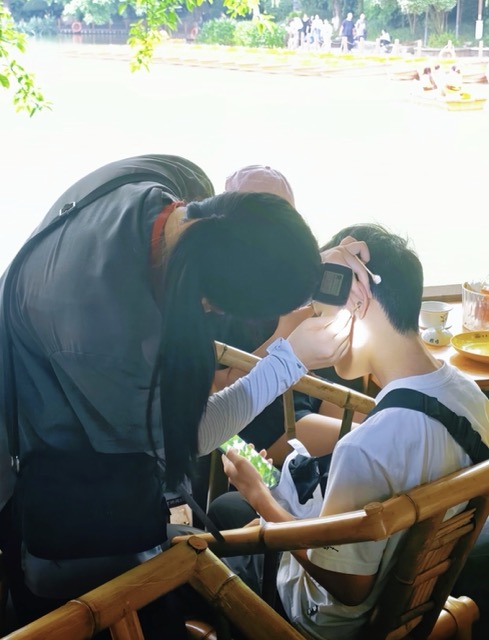
Half of the teahouse ritual happens in the chair. A trained cleaner works down your ear canal with a thin bamboo pick, a feather and a tuning fork, right in the open, while you sit still. It takes about fifteen minutes and costs very little. It is not medical care — it is a performance of care, and one of the most memorable small things you can do in Chengdu.
One practical note: teahouses are cashless. Set up WeChat Pay or Alipay, or bring a local friend; some places accept foreign cards, many do not. Prices are low, so this is the cheapest cultural afternoon on the trip.
3. Heritage Crafts You Can Try
Chengdu's intangible heritage is not behind glass. In studios around the city you can sit down with a teacher and make something with your own hands — and take it home. No experience is required, and the sessions are short enough to fit into an afternoon.
Shu embroidery and weaving (蜀绣 · 蜀织)
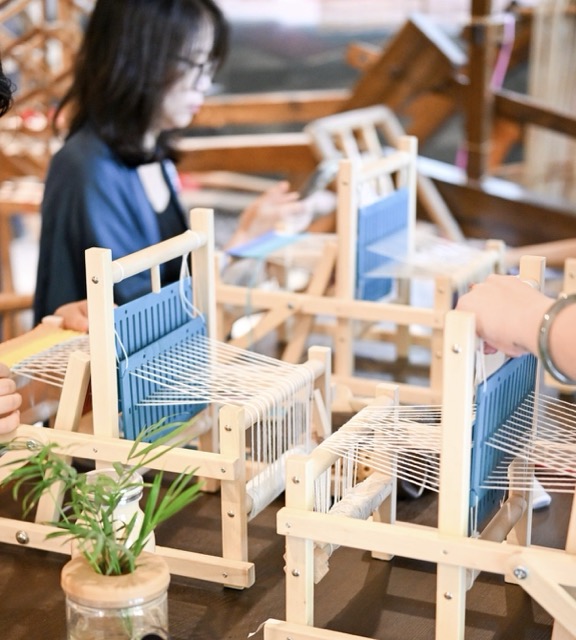
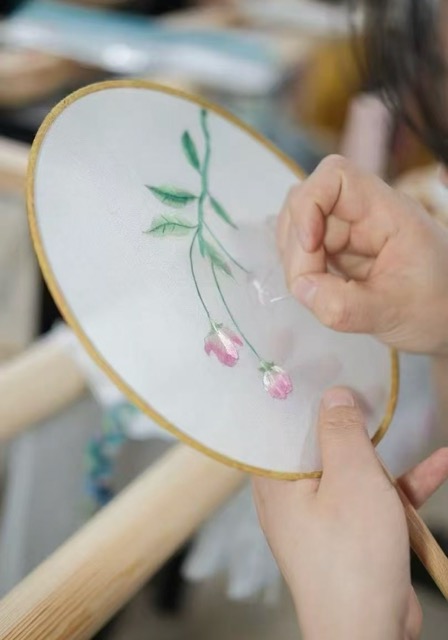
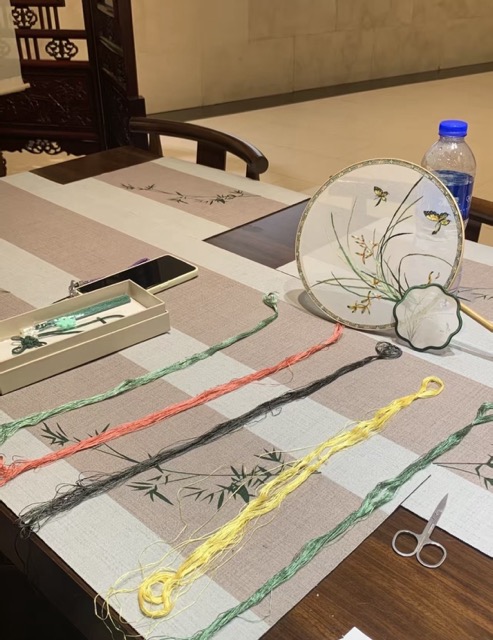
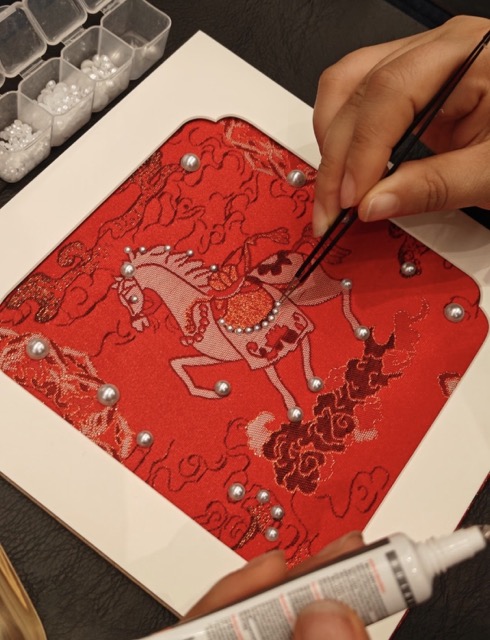
Shu embroidery is one of China's four great embroidery traditions, known for bright silk threads, smooth surfaces and images that read almost like paintings. In a two-hour workshop you learn a few basic stitches and embroider a round silk fan (团扇) with a plum blossom or bamboo motif. The fan, thread and tools are usually included. Weaving at a loom is the bigger sibling of the craft and takes longer — a half-day if you want to do it properly.
Velvet flowers, wrapped flowers and cloisonné
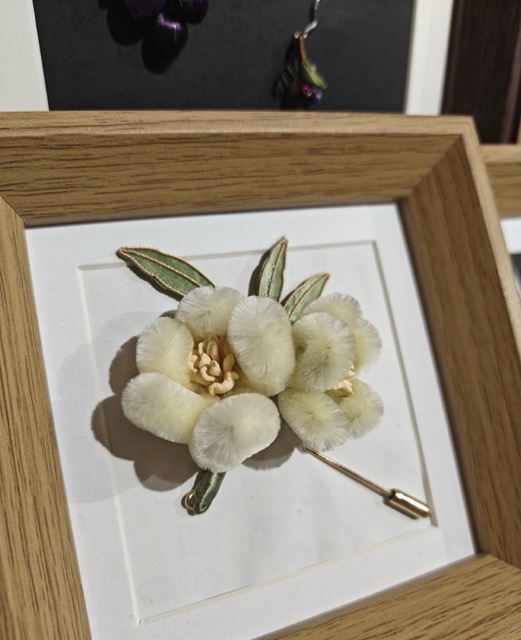
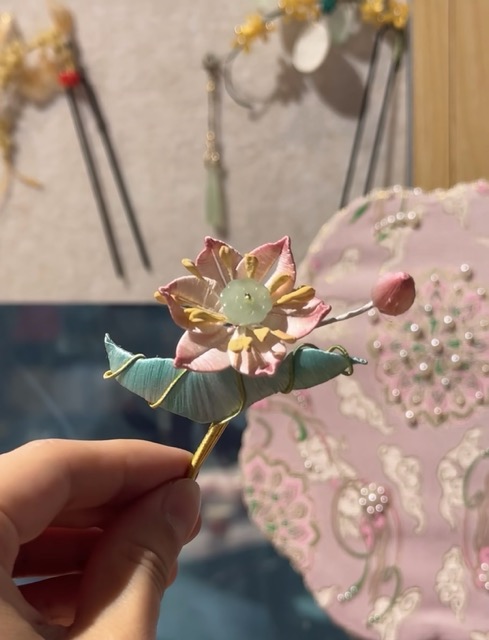
绒花 (velvet flower) is made from silk and thin copper wire, twisted and folded into petals for a hairpin. 缠花 (wrapped flower) wraps silk thread around shaped card to build a translucent flower. 掐丝珐琅 (cloisonné enamel) starts with a wire outline and ends with coloured enamel fired into a pendant. All three are fiddly, meditative and surprisingly forgiving for beginners.
What a workshop is like
Expect one to three hours, a small group, and a teacher who demonstrates rather than lectures. English support varies; even without it, the hands-on format works. Ask about the materials fee when you book, confirm whether you keep what you make, and bring cash or a working payment app as a backup.
4. Build a Heritage Day
The three experiences fit together naturally. Keep the order — tea, craft, opera — because the teahouse is the slowest and the opera is the loudest.
14:00 · Teahouse
Heming in People's Park, or Daci beside Taikoo Li. Order a set, watch the room, add ear cleaning if you are curious.
16:00 · Craft studio
A two-hour fan or flower workshop. Leave with something small and handmade, and hands that smell of silk.
19:30 · Opera
A small theatre for face-changing and fire-spitting. One to two hours, tea included, walkable from the centre.
If you only do one thing
Choose the opera. A one-hour face-changing show in a small hall costs less than a taxi across town and gives you the single most memorable image of the trip. Book a front-row seat, arrive twenty minutes early, and order tea while you wait.
5. Practical Information
Booking
Opera: a day or two ahead for weekends. Craft workshops: one day ahead, especially for English instruction. Teahouses: no booking, just walk in.
Language
Shows are visual and need no translation. Workshops are demonstration-led. Teahouse menus often have photos.
Money
Tea ¥20–50 with free refills; ear cleaning extra. Opera and workshop prices vary by venue and materials — confirm when booking.
Etiquette
No flash around performers. Ask before filming. Do not touch props or costumes. Tip is not expected, but a small thank-you is welcome.
Rain is not a problem: all three are indoors. Avoid the week of Chinese New Year and the first week of October, when domestic travel peaks and small theatres sell out. Weekday afternoons are the calmest time in a teahouse, and the best light for photographs.
Frequently Asked Questions
Is Sichuan opera face-changing real magic?
No. It is a quick-change technique using thin silk masks hidden in the costume, flipped or pulled away with a fan, a hand or a turn of the head. The exact method is a closely guarded trade, which is why it still looks impossible from the third row.
Where can I see Sichuan opera in Chengdu?
Small theatres and teahouses rather than grand opera houses. Baijia Ban, Liyuan Guild Hall, Da Xitai Teahouse, Xidie Theatre and Chunxi Theatre all run compact one-to-two-hour shows with face-changing, fire-spitting, acrobatics and comic sketches.
Do I need to understand Chinese to enjoy the show?
No. Face-changing, fire-spitting and acrobatics are entirely visual. The comic sketches rely on local dialect and slang, so they land better if someone translates, but the evening works without a word of Chinese.
How much does a teahouse visit cost?
Usually 20–50 yuan per person for a pot of tea, with free refills. Snacks and ear cleaning are extra. Teahouses are casual: order, sit, and stay as long as you like.
What is a gaiwan and how do I use it?
A gaiwan is a three-piece tea vessel: a saucer, a bowl and a lid. Hold the saucer with your left hand, use the lid with your right to push the leaves back, and sip from the bowl. The three parts are traditionally read as heaven, earth and humanity.
Can foreigners join a craft workshop?
Yes. Shu embroidery, velvet flower and cloisonné studios welcome beginners, and the teaching is mostly hands-on demonstration. English support varies, so book through a platform or hotel that can confirm the language in advance.
How long does a heritage craft workshop take?
One to three hours. A simple embroidered round fan takes about two hours; a velvet flower hairpin or a cloisonné pendant usually fits into one to three hours. No experience is needed.
Can I do opera, tea and crafts in one day?
Yes, and it is the best way to see them. Start at a teahouse in the early afternoon, join a craft workshop around 16:00, then catch an evening opera show. The three experiences are all indoors, so rain does not ruin the plan.
Conclusion
Chengdu's heritage is not something to tick off a list. It is a mask that changes before your eye, a cup that never empties, and a fan that only becomes yours after your own stitches. Give each of them an hour or two and the city stops being a stopover and starts being a place you participated in.
Related Articles
Share this article:
Link copied to clipboard!
No comments yet. Be the first to share your thoughts!