Quick Guide
Introduction
Many travelers visit Xi'an and see two famous ancient towers: Big Wild Goose Pagoda and Small Wild Goose Pagoda. At first glance, they look very similar. Both are old brick towers from the Tang Dynasty. Because their names only differ by one word—"Big" and "Small"—most foreign visitors think the same thing: Small Wild Goose Pagoda is just a smaller copy of Big Wild Goose Pagoda.
This is a very common misunderstanding. In fact, these two towers are completely different historic buildings. To help you tell them apart at a glance, here is a clear side-by-side comparison first:
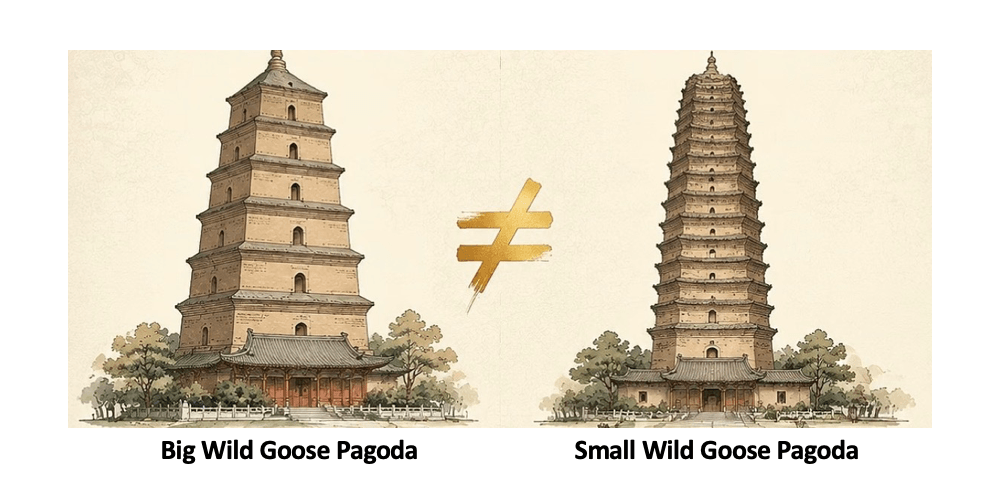
Side-by-Side Comparison: Big vs Small Wild Goose Pagoda
| Comparison Item | Big Wild Goose Pagoda | Small Wild Goose Pagoda |
|---|---|---|
| Full Name & Affiliation | Ci'en Temple Pagoda, belongs to Ci'en Temple | Jianfu Temple Pagoda, belongs to Jianfu Temple |
| Built Time | 652 AD (early Tang Dynasty) | 707–710 AD (about 50 years later) |
| Key Related Monk | Monk Xuanzang (玄奘) | Monk Yijing (义净) |
| Pilgrimage Route | Overland Silk Road — traveled on foot from China to India | Maritime Silk Road — traveled by sea from China to India |
| Architectural Style | Loft-style pagoda (楼阁式塔) | Dense-eave pagoda (密檐式塔) |
| Floor Count | 7 floors (after historical repairs) | 13 floors (original 15, damaged by earthquakes) |
| Overall Look | Square, thick, solid, grand and powerful; clear floor layers and wide eaves | Slim, slender, soft and elegant; dense narrow eaves, body gently narrows upward |
| Core Historical Meaning | Represents Overland Silk Road cultural exchange; witnesses Xuanzang's scripture collection and translation | Represents Maritime Silk Road cultural exchange; witnesses Yijing's sea pilgrimage and Jianfu Temple translation |
1. Big Wild Goose Pagoda: Built for the Overland Silk Road Story
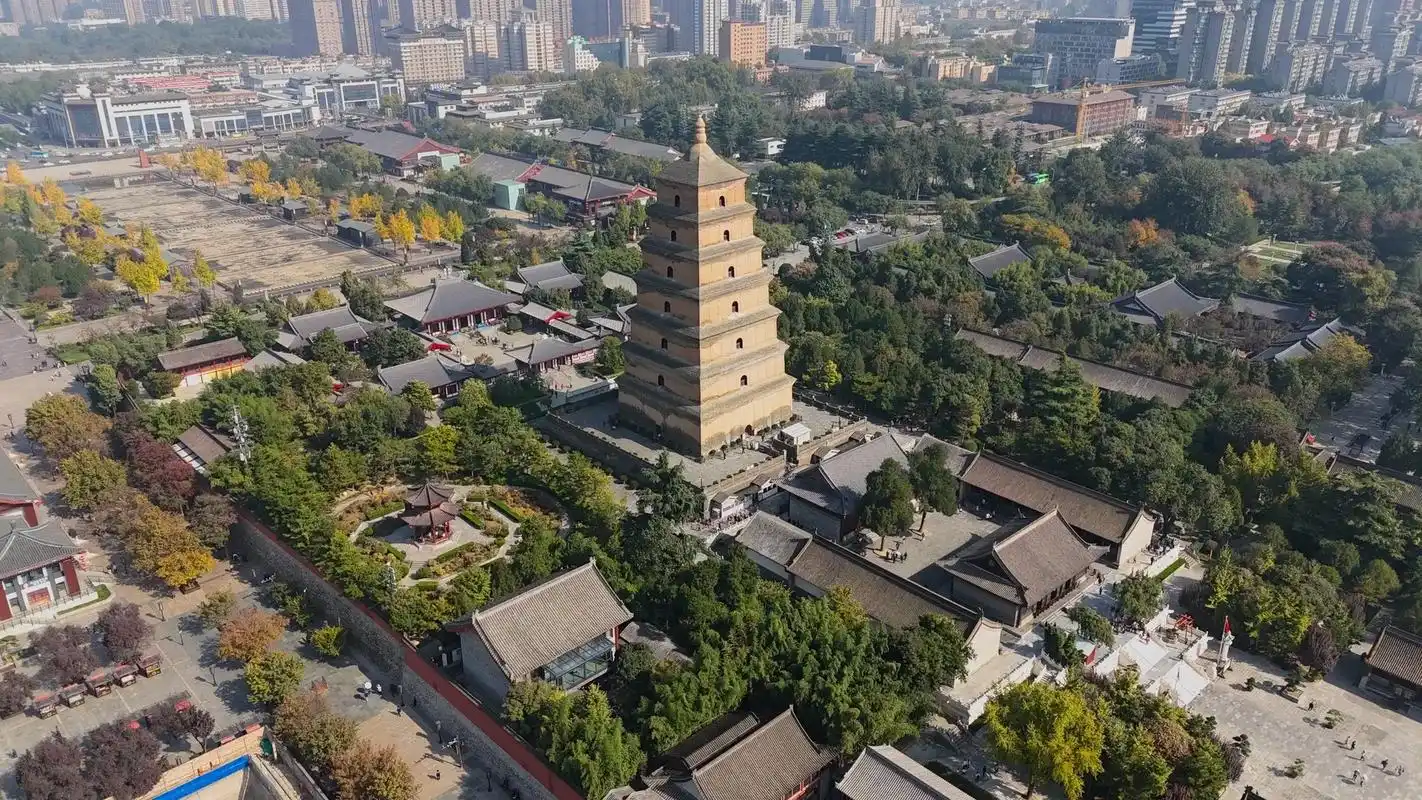
Big Wild Goose Pagoda was built in 652 AD, specially for the famous monk Xuanzang.
Many people know Xuanzang from Chinese classic stories. He traveled from China to India on foot, along the overland Silk Road. He spent more than 10 years studying Buddhism, and collected a huge number of ancient scriptures, Buddha statues, and sacred relics.
After he returned to Xi'an (ancient Chang'an), he needed a safe, permanent place to store and translate these precious treasures. For this reason, the Grand Tang Dynasty built Big Wild Goose Pagoda in Ci'en Temple.
The tower was originally 5 floors. After hundreds of years of repairs and reconstructions, it now has 7 floors. It is a typical loft-style pagoda: every floor has clear boundaries, wide and prominent eaves, and a square, thick body. It looks like a tall, solid ancient building that you can climb step by step — very grand and steady.
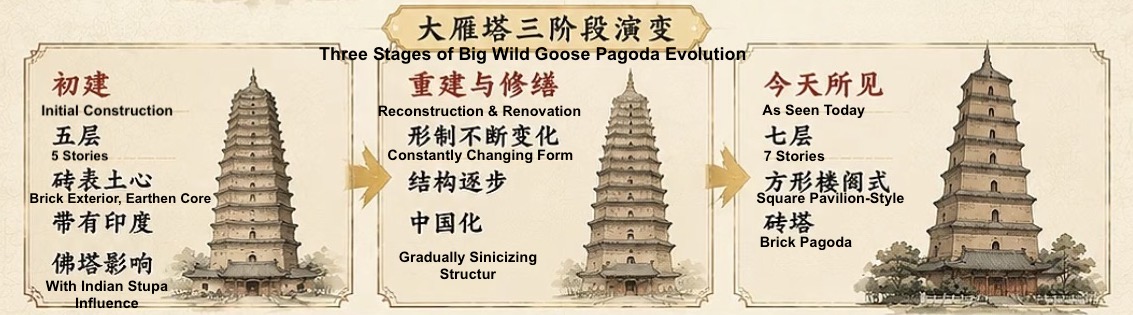
This tower is not just an ancient building — it is a symbol of:
-
•
Overland Silk Road cultural exchange between China and India
-
•
Xuanzang's legendary journey for Buddhist truth across harsh deserts and mountain ranges
-
•
The spread and localization of Buddhism in ancient China
2. Small Wild Goose Pagoda: Built for the Maritime Silk Road Story
Small Wild Goose Pagoda was built between 707 AD and 710 AD, about 50 years after Big Wild Goose Pagoda. It was built for another great ancient monk, Yijing.
Most tourists only know Xuanzang, but Yijing also made a huge contribution to Chinese Buddhism.
Unlike Xuanzang's land journey, Yijing chose to go to India by sea. He sailed through the maritime Silk Road, visited dozens of countries, studied Buddhist teachings for more than 20 years, and brought back a large number of rare Buddhist scriptures.
When he returned to Chang'an, he lived in Jianfu Temple, and led a large-scale Buddhist translation project. Small Wild Goose Pagoda was built to store the scriptures he brought back, and to record his great contribution.
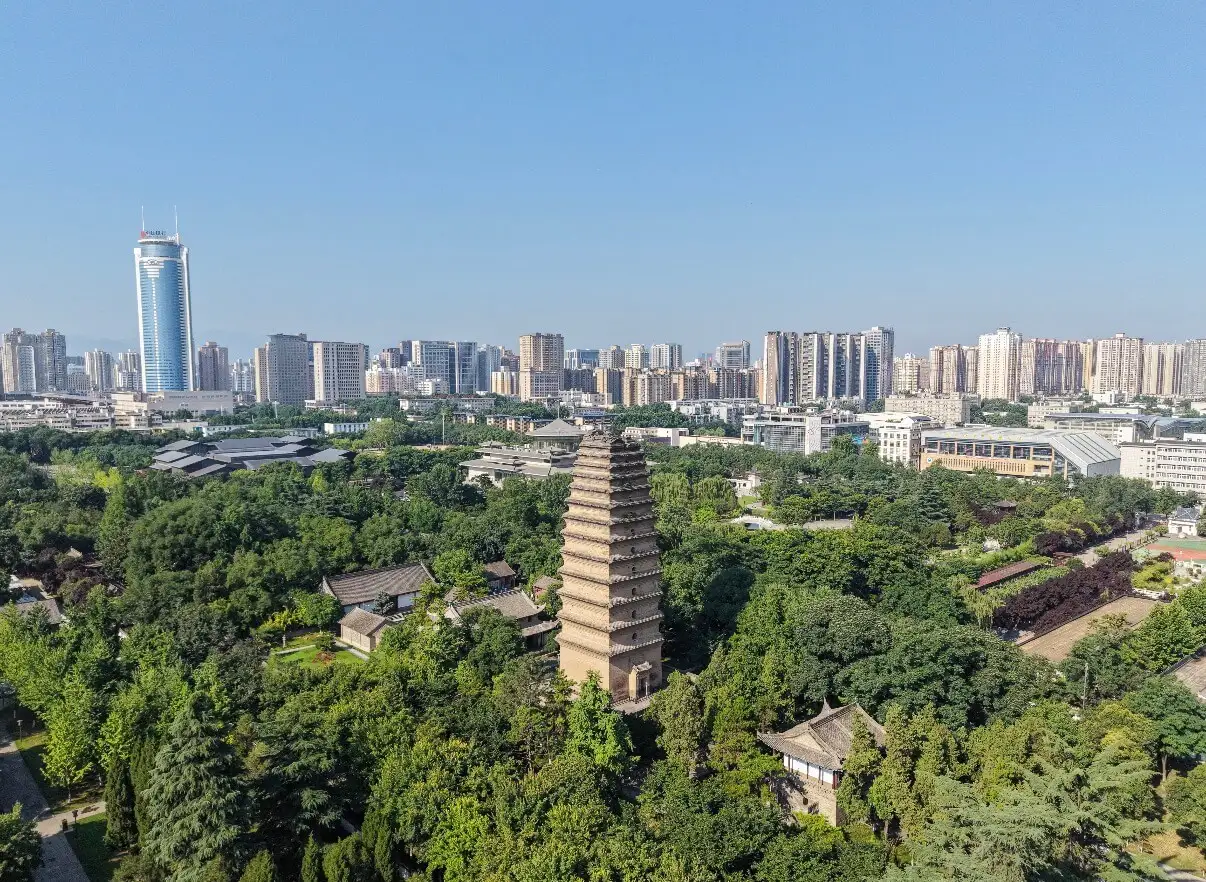
The tower originally had 15 floors. Due to thousands of years of earthquakes and natural damage, 13 floors remain today. It is a classic dense-eave pagoda: the first floor is very tall, while the upper layers have many narrow, close-set eaves. The tower body slowly narrows from bottom to top, forming a smooth, soft curve — it looks very slim, elegant, and quiet.
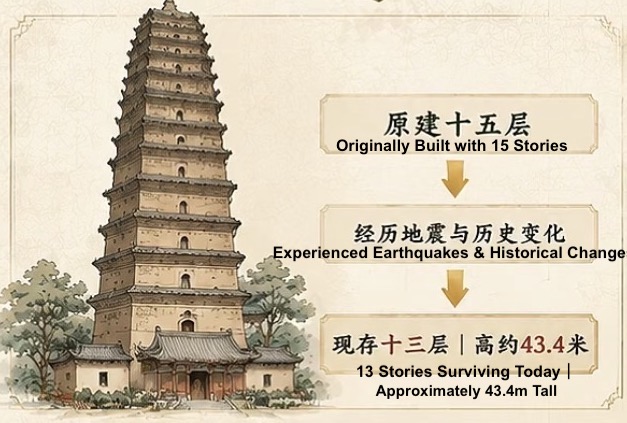
This tower stands for:
-
•
Maritime Silk Road cultural exchange between China and South Asia
-
•
Yijing's lesser-known but equally important sea pilgrimage — a journey of 20+ years across dozens of countries
-
•
The famous ancient Buddhist translation center at Jianfu Temple, where Yijing led a large-scale translation project
3. "Big" and "Small" Are Only Simple Names for Distinction
Long ago, people did not call them "Big Wild Goose Pagoda" and "Small Wild Goose Pagoda." They were named after their affiliated temples: Ci'en Temple Pagoda and Jianfu Temple Pagoda.
Because both towers had the nickname "Wild Goose Pagoda" in local folk culture, people later used "Big" and "Small" to tell them apart easily in daily life.
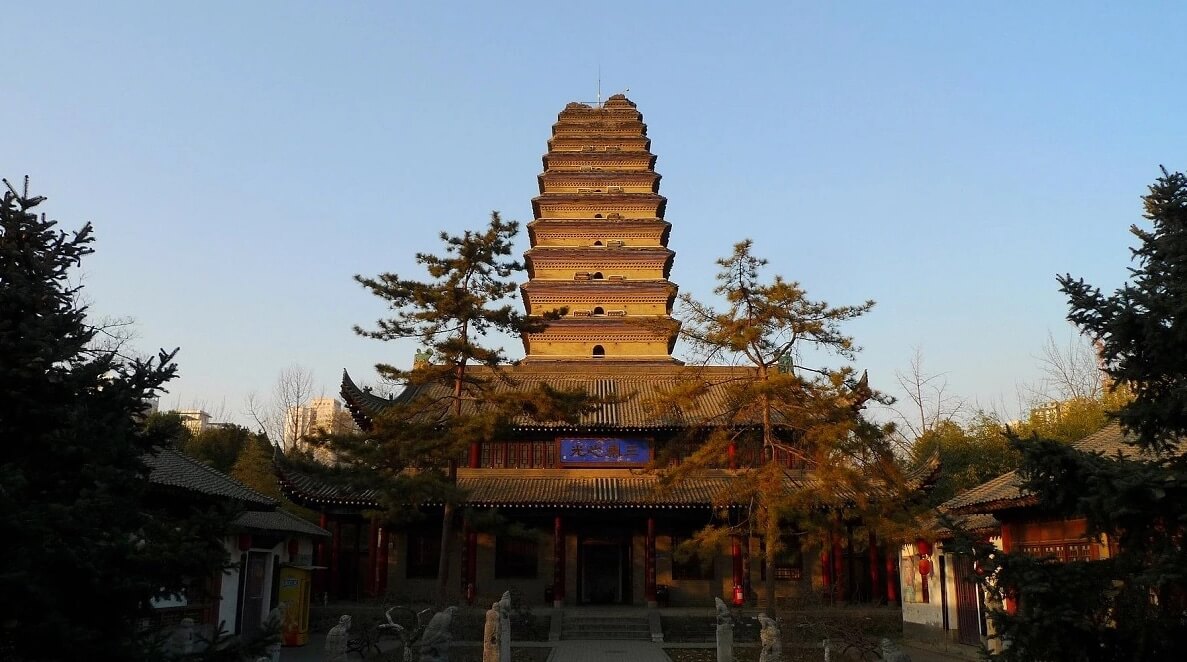
Key Insight
These two words are just simple labels for distinction. They do not mean one is the original work, and the other is a reduced copy. The two towers are completely independent, with their own historical stories and architectural features.
4. What to See When You Visit the Two Pagodas
At Big Wild Goose Pagoda
- • Enjoy the grand 7-floor ancient loft-style architecture
- • Learn about Xuanzang's overland pilgrimage story and his contribution to Buddhism
- • Feel the history of Buddhist translation and cultural exchange on the overland Silk Road
- • Check out the famous "Yanta Tí Míng" (Wild Goose Pagoda Inscription) culture, where ancient scholars left their names after passing the imperial exam
At Small Wild Goose Pagoda
- • Admire the unique slim dense-eave pagoda design and its elegant curve
- • Discover Yijing's legendary maritime Silk Road journey
- • Observe the ancient earthquake marks left on the tower body, which record thousands of years of geological history
- • Experience the peaceful "Morning Bell of Jianfu Temple" — one of the most famous scenic spots in ancient Chang'an
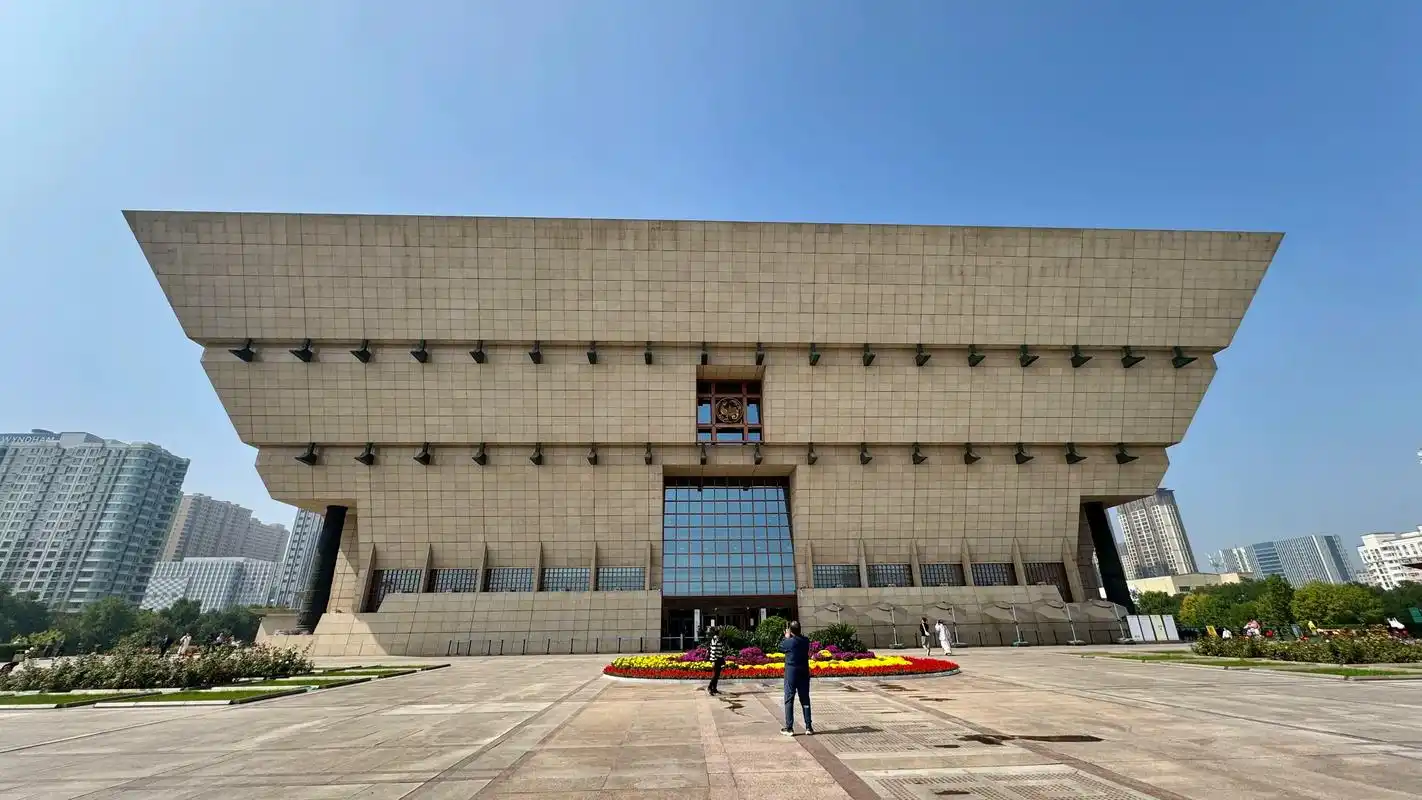
- • Visit the quiet and rich Xi'an Museum inside the same scenic area
Final Conclusion
Big Wild Goose Pagoda and Small Wild Goose Pagoda are two completely independent ancient landmarks, not the same tower in different sizes.
-
•
One represents the overland Silk Road, with a grand, powerful style and Xuanzang's legendary story.
-
•
One represents the maritime Silk Road, with a slim, elegant style and Yijing's precious legacy.
Next time you travel in Xi'an, you will no longer see them as "one big tower and one small tower." You will see two different thousand-year histories of cultural exchange between China and the world.
FAQ About Xi'an Wild Goose Pagodas
Q: What is the main difference between Big Wild Goose Pagoda and Small Wild Goose Pagoda?
A: The key difference is their historical meaning: Big Wild Goose Pagoda represents the Overland Silk Road (Monk Xuanzang's journey), while Small Wild Goose Pagoda represents the Maritime Silk Road (Monk Yijing's sea voyage). Architecturally, Big Goose is a loft-style square pagoda (7 floors), while Small Goose is a dense-eave pagoda (13 floors, originally 15).
Q: Which pagoda is older, Big Wild Goose or Small Wild Goose?
A: Big Wild Goose Pagoda was built in 652 AD (early Tang Dynasty). Small Wild Goose Pagoda was built about 50 years later, between 707–710 AD.
Q: How many floors do Big Wild Goose Pagoda and Small Wild Goose Pagoda have?
A: Big Wild Goose Pagoda has 7 floors (originally 5, rebuilt over time). Small Wild Goose Pagoda has 13 floors today (originally 15, reduced by earthquakes).
Q: What are the best times to visit these pagodas in Xi'an?
A: Early morning (8–10 AM) offers fewer crowds and better light for photos. For Big Wild Goose Pagoda's evening fountain show, visit around 9 PM. Spring (March–May) and autumn (September–November) provide the best weather.
Q: Who is Monk Xuanzang and Monk Yijing?
A: Monk Xuanzang traveled to India via the Overland Silk Road, spent 10+ years studying Buddhism, and brought back scriptures stored in Big Wild Goose Pagoda. Monk Yijing traveled to India via the Maritime Silk Road, spent 20+ years abroad, and brought back scriptures stored in Small Wild Goose Pagoda.
Q: Is Small Wild Goose Pagoda inside Xi'an Museum?
A: Yes, Small Wild Goose Pagoda and Xi'an Museum are located within the same scenic area (Jianfu Temple grounds), so you can visit both together in one trip.
Experience Both Silk Road Stories in One Day
Visiting both pagodas in a single day gives you a complete picture of Tang Dynasty China's openness to the world — one by land, one by sea. Combined with a trip to the Terracotta Army or Xi'an's Muslim Quarter, it makes for an unforgettable deep-dive into Xi'an's thousand-year history. Contact us for personalized Xi'an itinerary planning.
Conclusion
Big Wild Goose Pagoda and Small Wild Goose Pagoda stand as twin pillars of Xi'an's Tang Dynasty legacy — two towers, two pilgrims, two Silk Roads. Together, they tell the story of an empire reaching outward both by land and by sea, seeking knowledge and building bridges across cultures.
By visiting both and understanding their real differences, you don't just see two ancient towers — you witness two thousand-year chapters of how China connected with the world.
Share this article:
Link copied to clipboard!
No comments yet. Be the first to share your thoughts!