Quick Guide
Skip the Flight to Arizona — Shaanxi Has Its Own "Antelope Canyon"
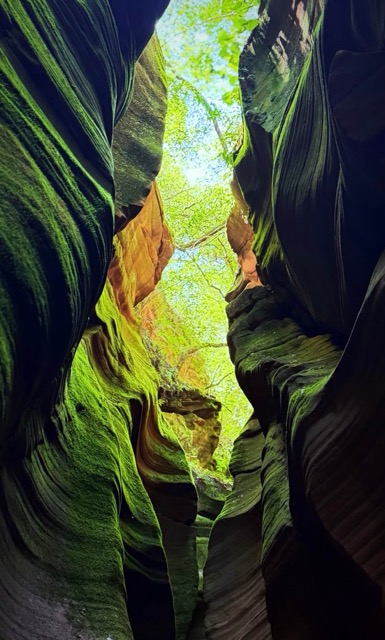
You don't actually need to fly 14 hours to Arizona, then drive another 5 hours into the desert, to witness a red sandstone slot canyon where sunlight beams down through narrow fissures and paints the walls in gold. A hidden spot in Yucha Village, Ganquan County, Yan'an, Shaanxi Province protects a breathtaking network of slot canyons known as Ganquan Grand Canyon (甘泉大峡谷) — often called "China's Antelope Canyon" — where wavy, undulating rock walls glow with shifting shades of crimson, ochre and purple when midday light pours in from above.
Discovered as recently as 2017, this canyon system was carved over thousands of years by seasonal flash floods rushing through soft red sandstone beneath the Loess Plateau. The result is a series of narrow, towering gorges with silky, flowing wall textures — every bit as photogenic as Arizona's famous slot canyons, yet barely known outside China.
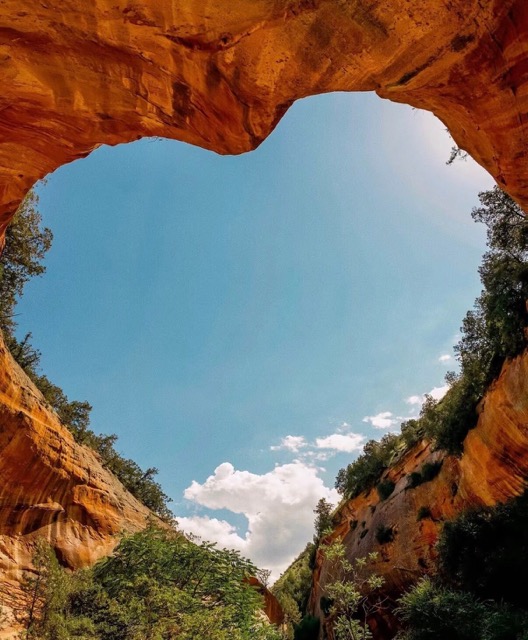
Travelers familiar with the American Southwest will immediately see the resemblance: "This looks like Antelope Canyon." And they're right — both are narrow red sandstone slot canyons sculpted by the same wind and water forces, both famous for midday light beams. But the two destinations still offer meaningfully different experiences. In a nutshell:
The Short Version
Ganquan Grand Canyon = a network of multiple rotating slot canyons beneath the Loess Plateau, where you ride a shuttle bus and explore open gorges at your own pace — with Huashu Gorge as the must-visit centerpiece.
Antelope Canyon = a single, polished slot canyon on Navajo Nation land, where mandatory guided tours and strict timed groups create an intimate but rushed experience of the famous "light beam" moment.
If you are planning a China trip and love dramatic canyons, read on for a complete, honest, and practical comparison — no marketing fluff, just the real differences that will decide which one (or both) deserves a spot on your bucket list.
Side-by-Side Comparison: Ganquan Grand Canyon vs Antelope Canyon
The most useful overview in one glance. Every row answers a practical question travelers actually ask before they book:
| Comparison Item | Ganquan Grand Canyon, China | Antelope Canyon, USA |
|---|---|---|
| Landform Type | Network of multiple narrow slot canyons carved by flash floods through red sandstone beneath the Loess Plateau | Single deep, narrow slot canyon carved by flash floods into soft Navajo sandstone |
| Feeling / Mood | Rotating, adventurous — you never know which 2–3 canyons will be open; each visit is unique | Intimate, mysterious — a tight, dark, vertical tunnel of polished walls and dancing light |
| Sub-Canyons | Huashu Gorge · Longba Gorge · Mudan Gorge · Yueya Gorge (2–3 open daily, rotated) | Upper Antelope · Lower Antelope · Canyon X (separate tours & permits) |
| Access & Guide | Open public scenic area — shuttle bus included, then explore freely. No mandatory guide. | Located on Navajo Nation land. Mandatory authorized guided tours only. |
| Pace / Timing | Relaxed. 3–4 hrs total including shuttle. Explore open canyons at your own speed. | Strict timed groups. 1–1.5 hrs. Tour guides often rush the line. |
| Peak-Season Ticket | ~¥98 RMB (~$14 USD), shuttle bus included. | $60–$85 USD per person + mandatory guide fee. Photo permits cost extra. |
| Reservations Needed? | Same-day or next-day tickets are usually easy (except Chinese national holidays). | Must book weeks in advance, especially midday "light-beam" slots. |
| Bags & Equipment | Backpacks, water, tripods are allowed. Some canyons require shallow wading. | No bags allowed. Only phone or camera. No selfie sticks or tripods inside. |
| Best Light | Midday 11 AM–1 PM sun beams hit the canyon floors; the signature glowing-wall moment. | Midday 11 AM–1 PM sun beams hit the floor; the "God Light" moment. |
| How to Get There | Fly/train to Yan'an → drive 1.5 h to Yucha Village visitor center. | Fly Phoenix or Las Vegas → 4–5 hour drive to Page, Arizona. |
| Discovered / Established | 2017 — a very recent discovery near Yucha Village | Known to Navajo people for generations; opened to tourism in 1997 |
🌊 Landscape: A Rotating Canyon Network vs a Single Polished Slot
Ganquan Grand Canyon — The Rotating Slot Canyon Network
Unlike Antelope Canyon's single slot, Ganquan is a scattered network of multiple named slot canyons hidden beneath the Loess Plateau. The park opens 2–3 canyons daily based on weather and conservation needs — meaning no two visits follow the exact same route. The centerpiece is Huashu Gorge (桦树沟), roughly 1 km long, with the richest wall textures and the most dramatic light beams — responsible for an estimated 90% of the viral photographs.
- • Multiple canyons, rotating access — each visit may reveal a different combination of gorges.
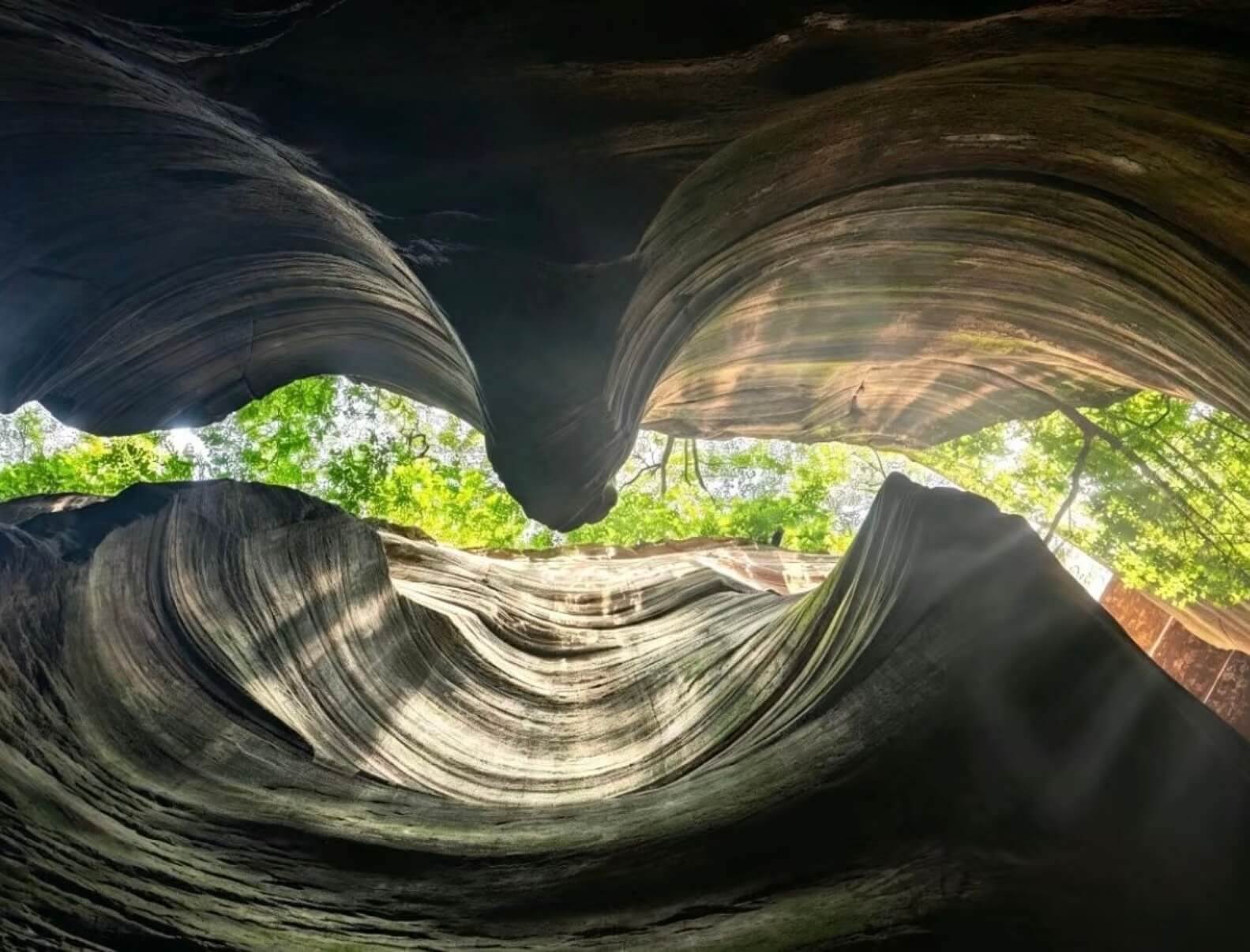
- • Wavy, undulating wall textures carved by centuries of rainwater and flash floods.
- • Midday light beams filter through top fissures, painting ochre walls in gold and crimson.
Antelope Canyon — A Single Light-Beam Cathedral
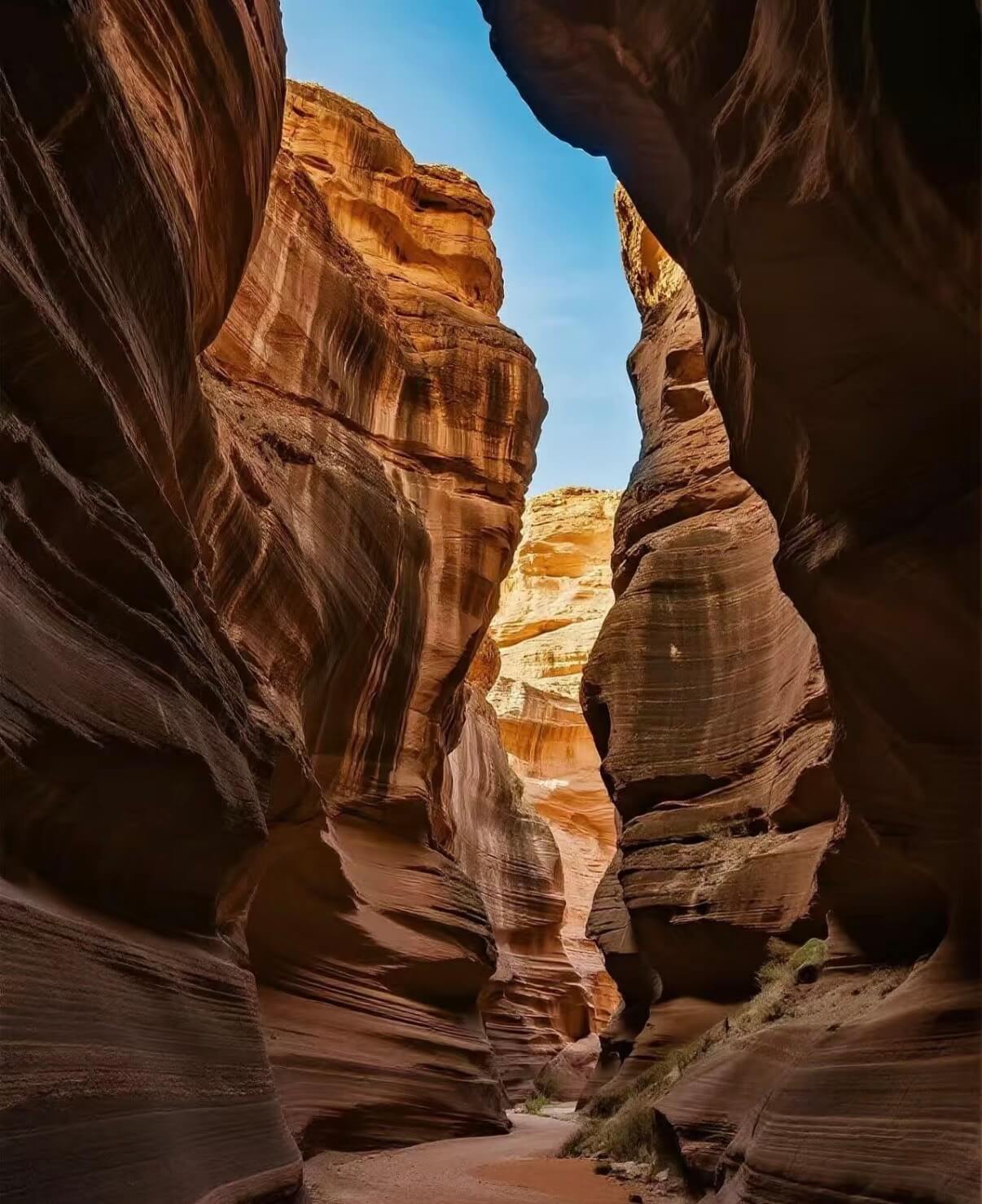
Antelope Canyon is a single, thin, deep slot in the desert. For thousands of years, summer monsoon floods rushed through cracks in soft Navajo sandstone, polishing the walls into silky, flowing curves. What you experience there is not a network to explore, but one narrow corridor to walk inside — famous for the midday "pillar of heaven" light beam.
- • Narrow, vertical, enclosed — walls tower 40 m above but the floor is barely a meter wide in spots.
- • Chasing the light beam — midday sun slants through a top opening and creates a mystical "pillar of heaven" effect.
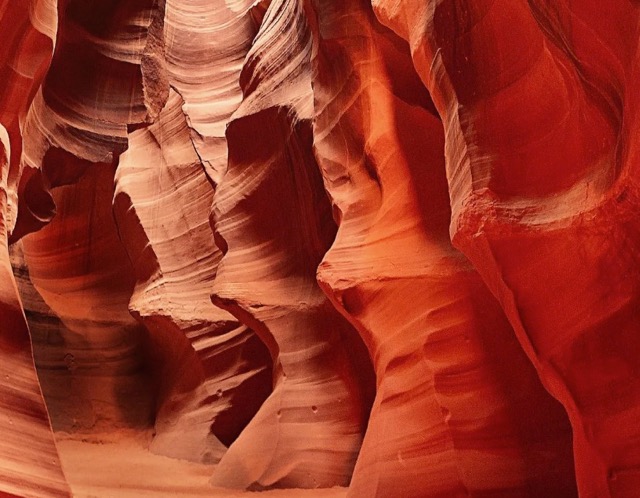
- • Ultra-smooth texture & rich shadow gradients — ideal for abstract close-up photography.
👣 Experience: Free Exploration vs Timed Guided Groups
If you ask us which canyon gives you the better vacation pace, the winner is clear.
Ganquan Grand Canyon
It is an open public scenic area. You buy a ticket, take the included shuttle bus to the canyon entrances, and explore the open gorges at your own pace.
- • Shuttle bus included — takes you from the visitor center to whichever 2–3 canyons are open that day.
- • Huashu Gorge (桦树沟) — the must-visit centerpiece; 1–1.5 hours to fully appreciate the textures and light beams.
- • Bring a water bottle, a hat, and a camera; no one will rush you through the open canyons.
Antelope Canyon
Because it lies on the sovereign land of the Navajo Nation, the canyon is entirely closed to independent visitors.
- • You must book a Navajo-authorized tour.
- • Tours depart in strictly timed groups, usually lasting about 1–1.5 hours.
- • In peak season, the narrow corridor feels crowded and the guides frequently urge the group forward to make room for the next batch. Many photographers find this frustrating.
💰 Cost & Convenience: Both Have Trade-Offs
The table already gave you a quick snapshot. Here is a more honest, boots-on-the-ground breakdown:
¥ Ganquan Grand Canyon
-
▸
Base ticket: ¥98 RMB (~$14 USD), shuttle bus to canyon entrances included.
-
▸
No add-ons — all canyon access is included in the single ticket. No paid escalators or glass bridges inside.
-
▸
Queue risk: weekends & National Day (Oct 1–7) can produce shuttle bus lines. Arrive before 9 AM for the best midday light slots.
-
▸
How to get there: Fly or take a train to Yan'an, then drive about 1.5 hours to Yucha Village visitor center. You can also charter a car from Yan'an city.
$ Antelope Canyon
-
▸
Permit + guide: Lower Antelope ~$65–85 USD; Upper Antelope sometimes even higher for "photography tours."
-
▸
Photographer fees (tripods, long exposures) are usually charged separately and require dedicated photo tours (~$200+ for a 2-hour slot).
-
▸
Booking: slots sell out weeks ahead. The highly coveted midday "sunbeam" season (spring / summer) can sell out a month in advance.
-
▸
Restrictions: no bags, no backpacks, no selfie sticks. Only phones and cameras are allowed inside the canyon itself. For independent travelers, this is a real hassle after a long drive.
3 Must-See Canyons Inside Ganquan Grand Canyon
While Antelope Canyon essentially has one star experience (walking the single slot + chasing the sunbeam), Ganquan rewards visitors with multiple named branches — though the park rotates which 2–3 are open each day. Here are the three key canyons to hope for.
🌟 #1 Huashu Gorge (桦树沟) — The Visual Crown Jewel
The undisputed star of the entire scenic area. Approximately 1 km long, Huashu Gorge features the richest rock-wall textures and the most dramatic light-and-shadow effects of any branch in the network. An estimated 90% of the viral photographs circulating online were taken here. Regardless of which canyons are open on the day of your visit, Huashu Gorge is always included as the centerpiece. Recommended visit time: 1–1.5 hours. Arrive around midday when sunlight beams down through the top fissures for the signature glowing-wall shots.
📸 Photo tip: aim for 11 AM – 1 PM when sunlight beams directly down through the top fissures. Use a wide-angle lens and bracket exposures to capture both the bright light shaft and the shadowed wall textures in a single frame.
🌋 #2 Longba Gorge (龙巴沟) — The Longest and Most Untamed
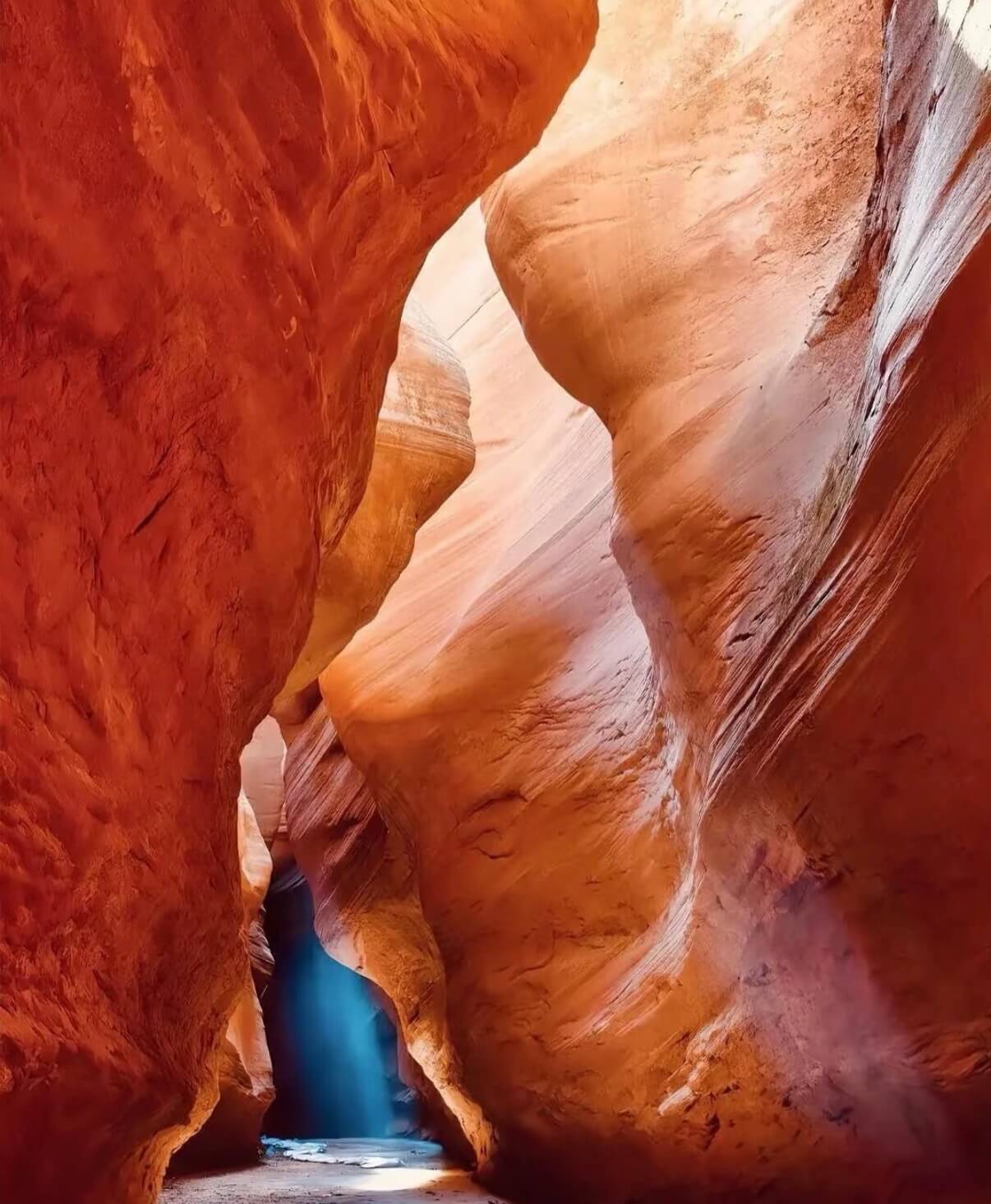
The longest and most rugged branch at roughly 2.5 km. Sections require sideways shuffling or shallow wading through water, heightening the sense of exploration. The walls are raw and less polished than Huashu Gorge, but the sense of venturing into untouched wilderness is unmatched. Best suited for visitors in good physical condition who enjoy a more off-the-beaten-path experience.
📸 Photo tip: wear water-resistant shoes — some sections require shallow wading. Shoot vertical compositions to emphasize the towering walls pressing in from both sides.
🌸 #3 Mudan Gorge / Yueya Gorge (牡丹沟/月牙沟) — Delicate & Serene
Relatively short and delicately sculpted, with fewer visitors. The soft, diffused light and smooth curved walls create a gallery-like atmosphere that rewards patience. Ideal for portrait photography and quiet appreciation of the rock textures. If you are lucky enough to find one of these branches open on your visit, take your time — these are the hidden gems.
📸 Photo tip: overcast days (diffused light) bring out the smooth curved textures most evenly. These narrower, quieter canyons are perfect for intimate portrait shots against the flowing sandstone backdrop.
Final Verdict: Which One Should You Visit?
Since both are slot canyons with midday light beams, the choice comes down to access, cost, and the sense of discovery — not which one is more beautiful.
Choose Ganquan Grand Canyon if you want…
- ✓ A rotating network of multiple slot canyons — no two visits are exactly the same.
- ✓ Free exploration at your own pace, without a mandatory guide rushing you through.
- ✓ An extremely affordable price (~¥98) with shuttle bus included — roughly one-fifth the cost of Antelope Canyon.
- ✓ Backpacks, water bottles, and tripods are all allowed inside the canyons.
- ✓ You are already traveling in China (Xi'an, Yan'an, Shaanxi) and want a unique day trip or weekend add-on.
Choose Antelope Canyon if you want…
- ✓ A one-of-a-kind, tight-canyon light-beam experience — the "God Light" that Instagram is made of.
- ✓ Silky, abstract, close-up textures and deep shadow gradients polished by centuries of monsoon floods.
- ✓ You are already doing a classic American Southwest road trip (Grand Canyon, Zion, Bryce, Monument Valley).
Conclusion
Ganquan Grand Canyon doesn't try to "replace" Antelope Canyon — but it comes closer than anywhere else on Earth. Both are narrow red sandstone slot canyons carved by flash floods, both deliver that magical midday light-beam moment, and both produce photographs that stop people in their tracks. What Ganquan additionally offers is a rotating network of multiple canyons — meaning a sense of discovery and adventure that a single guided tour through one slot canyon simply cannot match.
The next time someone tells you, "You have to go to Arizona to see a red sandstone slot canyon," you can smile and tell them about Yucha Village, Ganquan County — a quiet corner of the Loess Plateau where centuries of rainwater sculpted a hidden canyon network every bit as breathtaking as anything in the American Southwest.
Plan Your Yan'an Trip With Wander Any Place
Ganquan Grand Canyon pairs perfectly with Yan'an's other top sights: Hukou Waterfall (壶口瀑布), Yellow Emperor's Mausoleum (黄帝陵), and Zhongshan Grottoes (钟山石窟). Combined, they deliver a deep dive into Shaanxi's revolutionary-era and ancient heritage. Browse our full Yan'an attractions list or contact us for a custom itinerary.
FAQ — Ganquan Grand Canyon vs Antelope Canyon
Q: Is Ganquan Grand Canyon similar to Antelope Canyon?
A: Yes — both are breathtaking red sandstone slot canyons carved by centuries of rainwater and flash floods, and both are famous for midday light beams filtering through narrow top fissures. The key difference is that Ganquan is a network of multiple rotating canyons managed as a public scenic area, while Antelope Canyon is a single slot canyon on Navajo Nation land requiring mandatory guided tours.
Q: When was Ganquan Grand Canyon discovered?
A: Ganquan Grand Canyon was discovered in 2017 near Yucha Village in Ganquan County, Yan'an. Despite being a recent discovery, the slot canyons were carved over thousands of years by seasonal flash floods through soft red sandstone beneath the Loess Plateau.
Q: Do I need a guided tour to visit Ganquan Grand Canyon?
A: No. Unlike Antelope Canyon on Navajo land, Ganquan Grand Canyon is an open public scenic area. A shuttle bus (included in the ticket) takes you to the canyon entrances, and you explore the open canyons at your own pace without a mandatory guide.
Q: How much is the Ganquan Grand Canyon entrance ticket?
A: Admission is approximately ¥98 RMB per person (~$14 USD), which includes the shuttle bus to the canyon entrances. This is roughly one-fifth the cost of an Antelope Canyon tour.
Q: What is the best time for photographing light beams at Ganquan?
A: Midday, roughly 11:00 AM to 1:00 PM, is when sunlight beams directly down through the narrow top fissures, creating the signature glowing-wall effect. Visit between May and October for the clearest weather conditions.
Q: How do I get to Ganquan Grand Canyon from Yan'an?
A: Drive from Yan'an city to Yucha Village visitor center, approximately 1.5 hours. You can also charter a car or take a local bus. The scenic area is about 60 km from Yan'an city center.
Q: Can I carry a backpack inside Antelope Canyon?
A: No. Antelope Canyon Navajo tour rules strictly forbid all bags inside the canyon — only a phone or a camera are permitted. This is one major practical difference compared to Ganquan Grand Canyon, where normal day backpacks, tripods, and water bottles are fine in the open canyons.
Share this article:
Link copied to clipboard!
No comments yet. Be the first to share your thoughts!