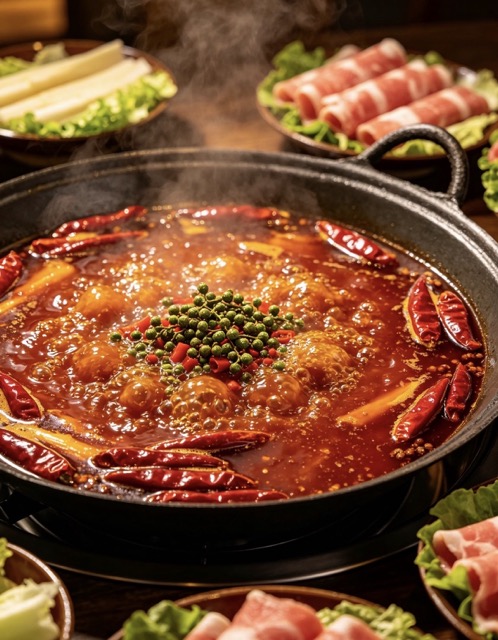
Quick Guide
Introduction
Chengdu and Chongqing sit less than 300 km apart, share a dialect, a love of chilies and one ancestor: the river-port hot pot of the upper Yangtze. Yet ask anyone from either city and you will hear the same answer — these are not the same dish. One is beef tallow, blunt and roaring. The other is clear oil, fragrant and layered. This guide breaks down what really changes in the pot, the dipping bowl and the plate, so you can order the hot pot you actually want.
1. A Field Guide to Chinese Hot Pot (中国火锅图鉴)
Hot pot in China is not one cuisine but a family of regional broths, each shaped by what grows nearby and how people eat in that climate. Before comparing Sichuan and Chongqing, it helps to see where both sit in the wider family. The chart below shows nine of the best-known styles — from the tallow-heavy pot of Chongqing to the clear beef broth of Chaoshan and the sour soup of Guizhou.
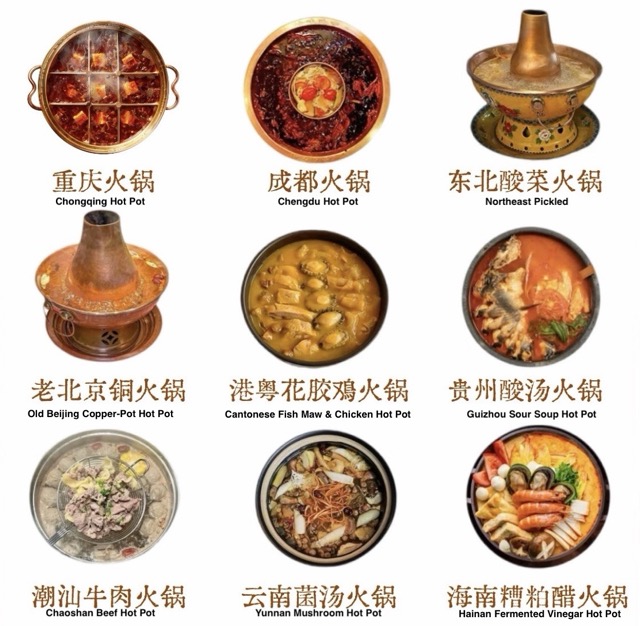
A quick map of China's hot pot styles (中国火锅图鉴) — tap to enlarge
重庆火锅 Chongqing Hot Pot
Pure beef tallow in a nine-grid iron pot; heavy, numbing and unapologetic.
成都火锅 Chengdu Hot Pot
Clear oil or a tallow blend with a dozen spices; softer heat and a rounder aroma.
东北酸菜火锅 Northeast Pickled Cabbage Hot Pot
Copper pot, pork belly and pickled cabbage — sour, warming, built for winter.
老北京铜锅火锅 Old Beijing Copper-Pot Hot Pot
Charcoal chimney, clear broth, sliced lamb and a sesame dipping sauce.
港粤花胶鸡火锅 Cantonese Fish Maw & Chicken Hot Pot
Golden collagen broth simmered with fish maw and chicken; gentle and rich.
贵州酸汤火锅 Guizhou Sour Soup Hot Pot
Fermented tomato sour soup, bright and appetite-sharpening.
潮汕牛肉火锅 Chaoshan Beef Hot Pot
Clear broth and hand-cut fresh beef; the meat, not the spice, is the point.
云南菌汤火锅 Yunnan Mushroom Hot Pot
Wild mushrooms in a clear chicken stock — earthy and umami-deep.
海南糟粕醋火锅 Hainan Fermented Vinegar Hot Pot
Rice-vinegar sour broth with seafood; light, tangy and coastal.
2. Sichuan vs Chongqing at a Glance
| Comparison Item | Chongqing Hot Pot (重庆火锅) | Sichuan Hot Pot (四川火锅 / 成都火锅) |
|---|---|---|
| Home base | Chongqing — a river port built on docks and factories | Chengdu and western Sichuan (川西) |
| Broth base | 纯牛油 — pure beef tallow | 清油 — rapeseed oil, or a tallow-oil blend |
| Oil to water | About 6:4, sometimes 7:3 | Lighter on oil, more broth |
| Aroma | Few spices; tallow and pure mala up front | A dozen blended spices; fragrant before it even boils |
| Heat | Aggressive, numbing, hotter the longer it simmers | Softer, rounded, with a faint sweetness at the end |
| Dipping sauce | Sesame oil and garlic only (香油蒜泥) | Self-service sauce station (自助小料台) |
| Signature plates | The offal trinity: 毛肚, 鸭肠, 黄喉 | Tender beef, fish fillets, shrimp paste, refined vegetables |
| Mood | Loud, fast, riverside swagger | Slow, social, built for a long evening |
| Best for | Chili veterans who want the full force | First-timers and mixed groups of eaters |
3. Same Ancestor, Two Cities
Both styles grew out of the same place: the busy docks of Chongqing in the late Qing dynasty. Porters and boatmen cooked cheap beef offal in a shared pot of boiling water, chili and Sichuan pepper — fuel for a night shift on the river. That is why the Chinese name for this culture, 码头文化 (dock culture), keeps coming up in every conversation about hot pot.
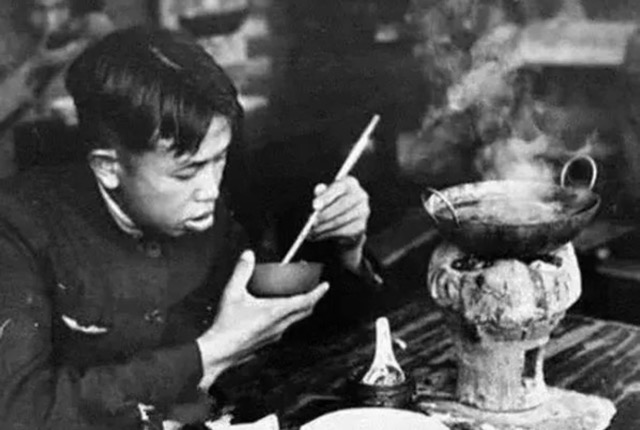
When the dish travelled upstream to Chengdu, it met a slower, wealthier city with a banquet tradition. Cooks there refined the recipe: they lightened the oil, added more spices, balanced the heat with fermented glutinous rice (醪糟) and rock sugar, and made the whole experience something you sit down for rather than gulp down. The result is often called 川西火锅 — western Sichuan hot pot.
4. The Broth: Beef Tallow vs Clear Oil (牛油 vs 清油)
This is the single decision that shapes everything else. Chongqing hot pot is built on rendered beef fat; Chengdu hot pot is built on rapeseed oil, or on a blend of the two.
Chongqing: pure beef tallow (纯牛油)
- Oil and water roughly 6:4, sometimes 7:3 — a thick, almost sauce-like broth.
- Dense and slightly sticky; it coats the tongue and solidifies into a brick when cold.
- Spices are kept simple so the tallow and the pure mala come through.
- Because there is so much fat, the pot gets hotter and heavier the longer it boils.
Sichuan: clear oil (清油)
- Rapeseed oil, or a tallow-and-oil blend, with far more broth in the pot.
- Lighter on the lips and easier to drink; it does not leave a waxy coating.
- A dozen or more spices go into the base, so the aroma arrives before the heat.
- Fermented glutinous rice and rock sugar add a soft, faintly sweet finish.
Key Insight
If you remember one line, make it this: Chongqing = 牛油 (beef tallow), Sichuan = 清油 (clear oil). Everything else — the heat, the aroma, even the dipping bowl — follows from that choice.
5. The Taste: Blunt Force vs Layered Warmth
A Chongqing pot is direct. The heat is high and the numbing sensation arrives immediately, then keeps building as the broth reduces. A Chengdu pot is a slower read: you smell the spice blend first, taste the fragrance, and only then feel the warmth spread. It is spicy, but rarely punishing — 香而不燥, fragrant without drying you out.
"Chongqing hot pot carries its own riverside swagger. The moment it boils, the aroma goes straight up your nose, the numbing heat is right there with no detour, and the longer it simmers the richer and more addictive it gets."
For most visitors the practical difference is simple: if you want to feel the chili, choose Chongqing. If you want to taste the spices and still be comfortable an hour later, choose Chengdu. Neither is "better" — they are two different evenings.
6. The Dipping Bowl: One Saucer vs a Whole Station (油碟 vs 自助小料台)
Chongqing keeps the dip almost ritualistically plain: a bowl of sesame oil with raw garlic, maybe a little chopped scallion or coriander. Its job is to cool the food and cut the chili without hiding the broth.
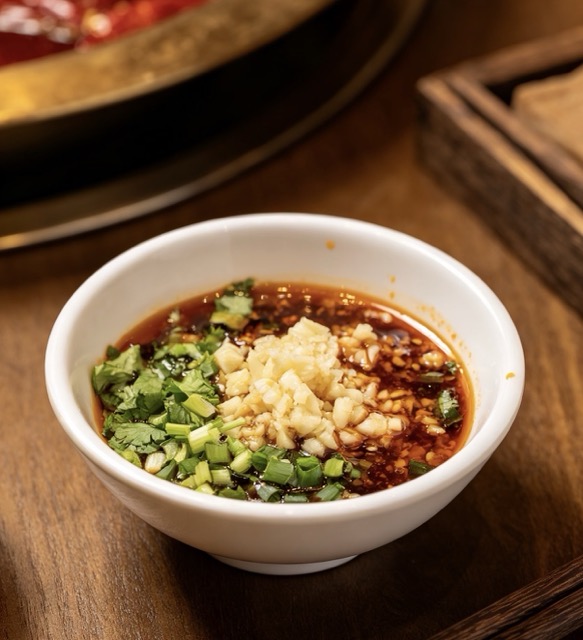
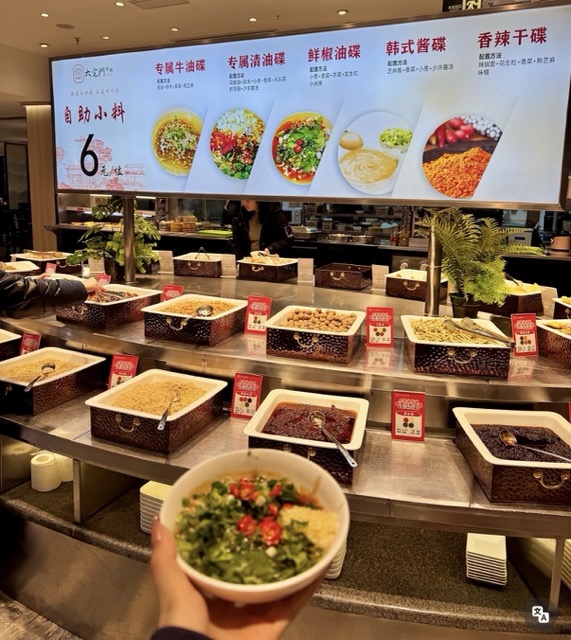
Chengdu gives you a sauce station. Besides the classic oil-and-garlic base there is oyster sauce, peanut sauce, sesame paste, dry chili mixes and chopped extras such as coriander root (折耳根) and pickled mustard bits. You are expected to experiment; everyone ends up with a different bowl.
7. The Plates: Offal Trinity vs Refined Spread (老三样 vs 精致多样)
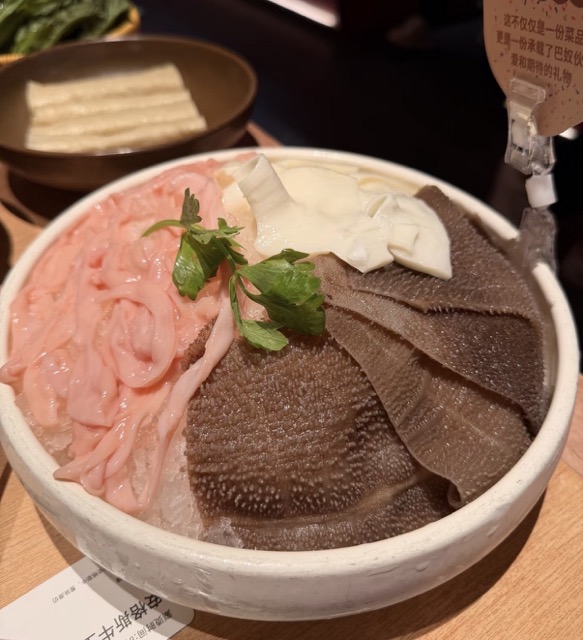
Chongqing's menu still reads like a dockworker's: 毛肚 (tripe), 鸭肠 (duck intestine) and 黄喉 (aorta) — crisp, quick-cooked and built for the broth. Add pig brain (脑花) and you have the full old-school set.
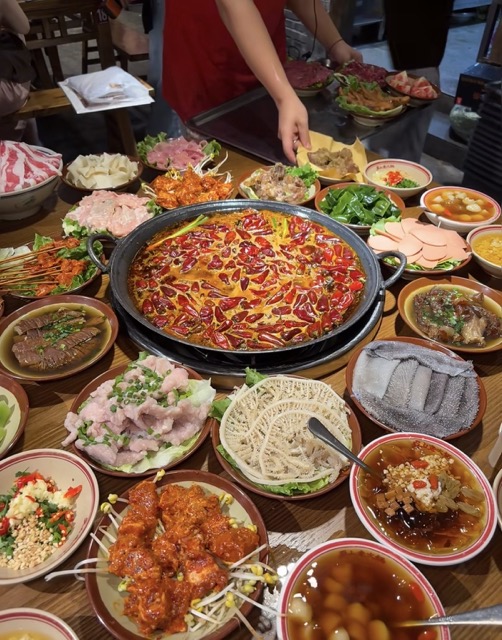
Chengdu spreads wider. Tender marinated beef, fresh fish fillets, hand-beaten shrimp paste and carefully arranged vegetables are all standard, and presentation matters. You can eat an excellent hot pot in Chengdu without touching offal at all.
8. How to Order Like a Local
Chinese menus are short on explanation, so here is the cheat sheet. Times are for a strong rolling boil.
| Dish | What it is | Dip for | Photo |
|---|---|---|---|
| 毛肚 (tripe) | Reticulated beef stomach, the signature plate | 15 seconds — "seven up, eight down" | 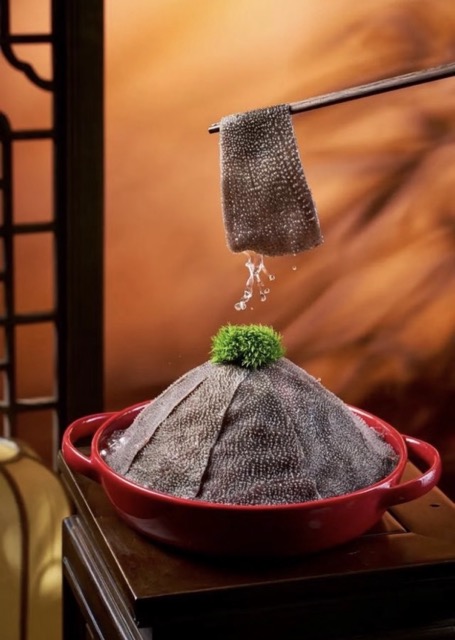 |
| 鸭肠 (duck intestine) | Long, thin and crisp | 10 seconds, until it curls | 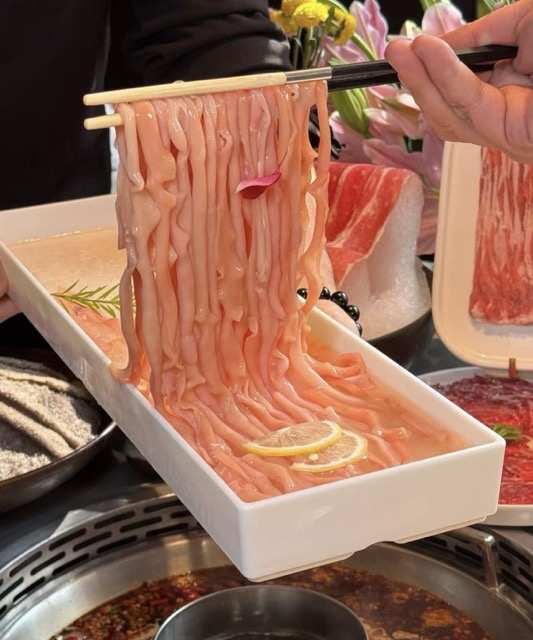 |
| 黄喉 (aorta) | Chewy, springy strips | 1–2 minutes | 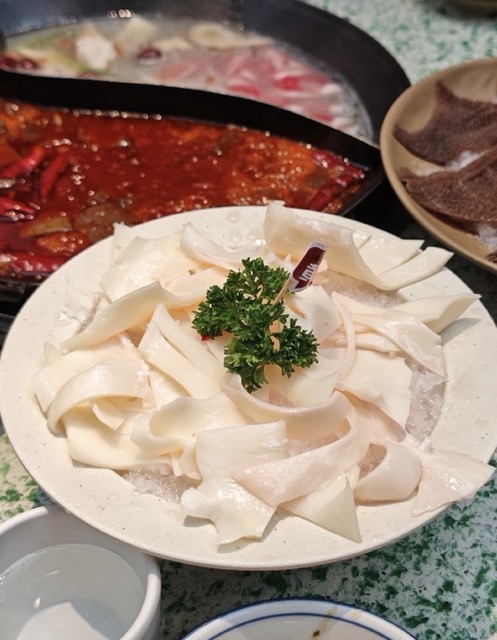 |
| 脑花 (pig brain) | Soft, creamy, an acquired taste | 8–10 minutes in a corner of the pot | 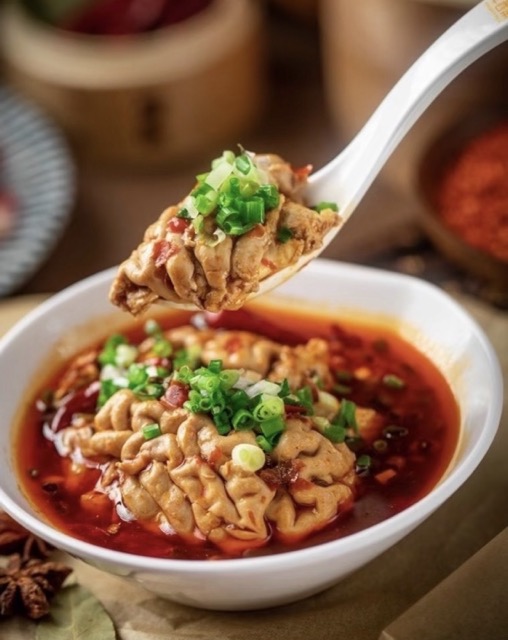 |
| 嫩牛肉 (tender beef) | Thin slices, often marinated | 20–30 seconds, just cooked | 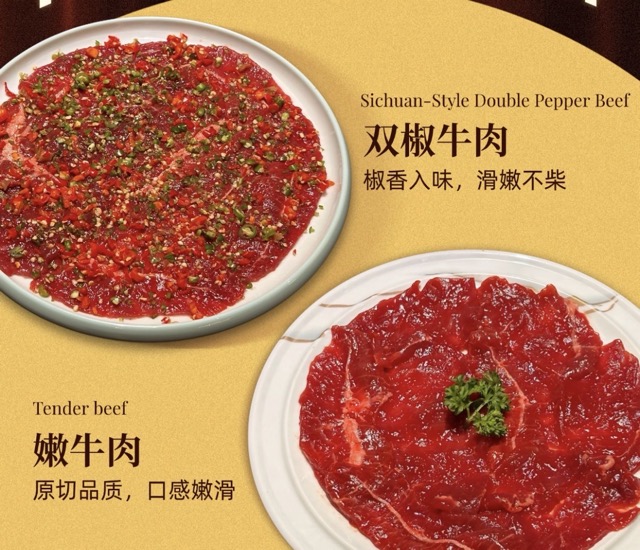 |
| 虾滑 (shrimp paste) | Hand-beaten paste spooned into the broth | 2 minutes, until it floats | 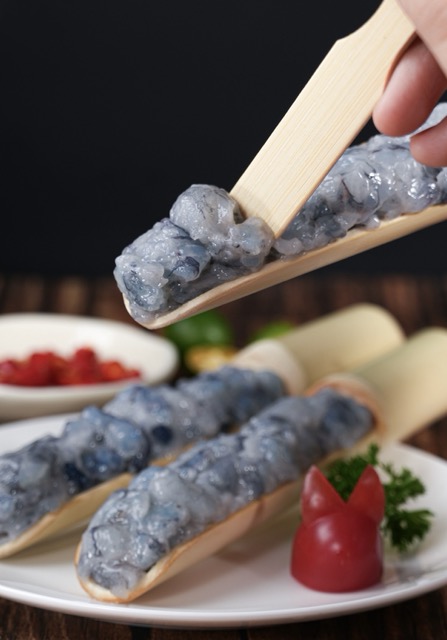 |
| 冰粉 (ice jelly) | Chilled jelly with brown sugar and toppings | After the meal, not in the pot | 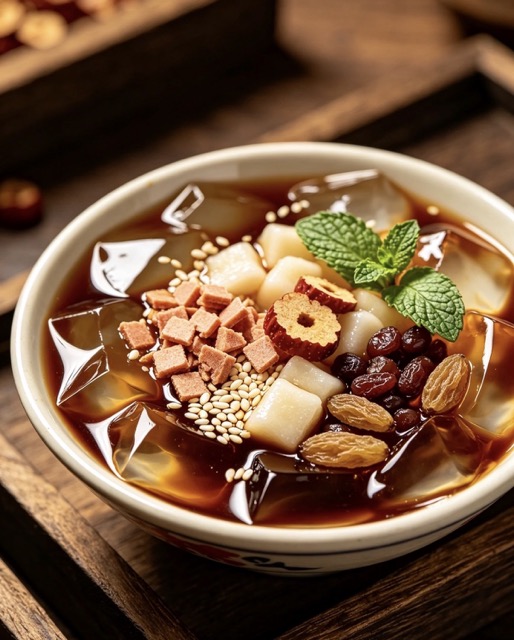 |
Four phrases that change your meal
- 微辣 (wēi là) — mild. Say it clearly; the default is not mild.
- 鸳鸯锅 (yuān yāng guō) — a divided pot, one half mild, one half spicy.
- 香油蒜泥 (xiāng yóu suàn ní) — sesame oil and garlic, the classic dip.
- 不要香菜 (bú yào xiāng cài) — no coriander, if you are in the anti-coriander camp.
9. Where to Eat in Chengdu
Chengdu is full of hot pot streets, but the concentration around 玉林 (Yulin), 建设巷 (Jianshe Xiang) and 奎星楼街 (Kuixinglou Street) makes a first visit easy: pick a busy shop, order a split pot and ask for 微辣. For the full picture, our Chengdu guides below cover the night markets, the classic dishes and the city itself.
FAQ: Sichuan and Chongqing Hot Pot
Q: Is Chongqing hot pot the same as Sichuan hot pot?
A: No. They share the same ancestor, the river-port hot pot of the upper Yangtze, but Chongqing hot pot uses a pure beef-tallow base and a minimal sesame-oil dip, while Sichuan (Chengdu) hot pot uses clear rapeseed oil or a tallow blend, more aromatic spices and a self-service sauce station.
Q: Which one is spicier, Chongqing or Sichuan hot pot?
A: Chongqing hot pot is usually hotter and more numbing. Its beef tallow carries chili and Sichuan pepper strongly, and the broth gets hotter the longer it boils. Sichuan hot pot is softer: fragrant first, then warm heat, often with a faint sweetness from fermented glutinous rice (醪糟) and rock sugar.
Q: What is the difference between 牛油 (beef tallow) and 清油 (clear oil)?
A: 牛油 is rendered beef fat. It is dense, slightly sticky, solidifies at room temperature and gives Chongqing hot pot its heavy, rounded heat. 清油 is refined rapeseed oil; it is lighter, does not coat the mouth and lets a dozen blended spices come through, which is typical of Chengdu hot pot.
Q: What is the nine-grid (九宫格) pot for?
A: The grid divides one pot into zones of different heat. The centre boils hardest and is for quick dips such as tripe and intestine; the corners simmer gently and are for slow-cooked items like tripe stems, duck blood or vegetables. It also keeps different diners' food from getting lost.
Q: I cannot take much heat — what should I order?
A: Ask for 鸳鸯锅 (a divided pot with a mild half), choose 微辣 (mild) rather than 中辣, and build a dipping bowl of sesame oil, garlic and vinegar, which cools the chili. A tomato or mushroom broth is also common in Chengdu and equally good.
Q: What are the must-order dishes at a Sichuan or Chongqing hot pot?
A: Start with the classic trinity: 毛肚 (tripe), 鸭肠 (duck intestine) and 黄喉 (aorta). Add 嫩牛肉 (tender beef), 虾滑 (shrimp paste) and 脑花 (pig brain) if you are adventurous, then finish with 冰粉 (ice jelly) to cool the mouth.
Conclusion
Sichuan and Chongqing hot pot are siblings, not twins. One is a bowl of beef tallow, chili and river-port swagger; the other is a slower, spice-forward evening built for conversation. Knowing which is which turns a confusing menu into a choice — and once you have chosen, the only rule left is the one every local follows: order the tripe first, and keep the ice jelly for the end.
Related Articles
Share this article:
Link copied to clipboard!
No comments yet. Be the first to share your thoughts!